Text-to-Speech for Students: Use Cases and Benefits
Students today rely on a growing range of audio tools to study more efficiently, retain more information, and manage heavy academic workloads. One of the most widely used solutions is text-to-speech software for students, which allows learners to convert written content into audio and even try it for free in a browser-based environment. Text-to-speech (TTS) software sits at the center of this shift — and the research behind it is more compelling than most people expect.
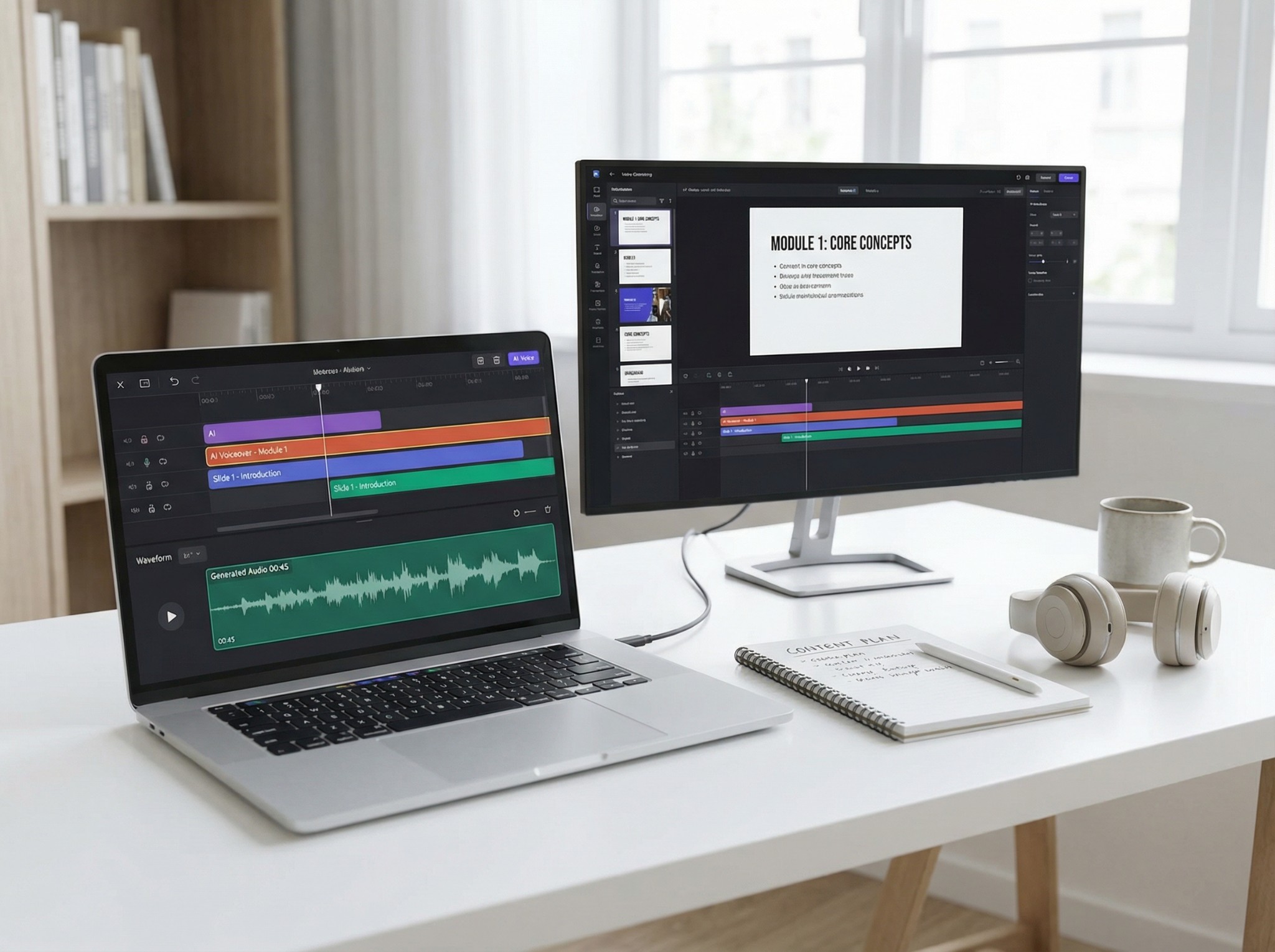
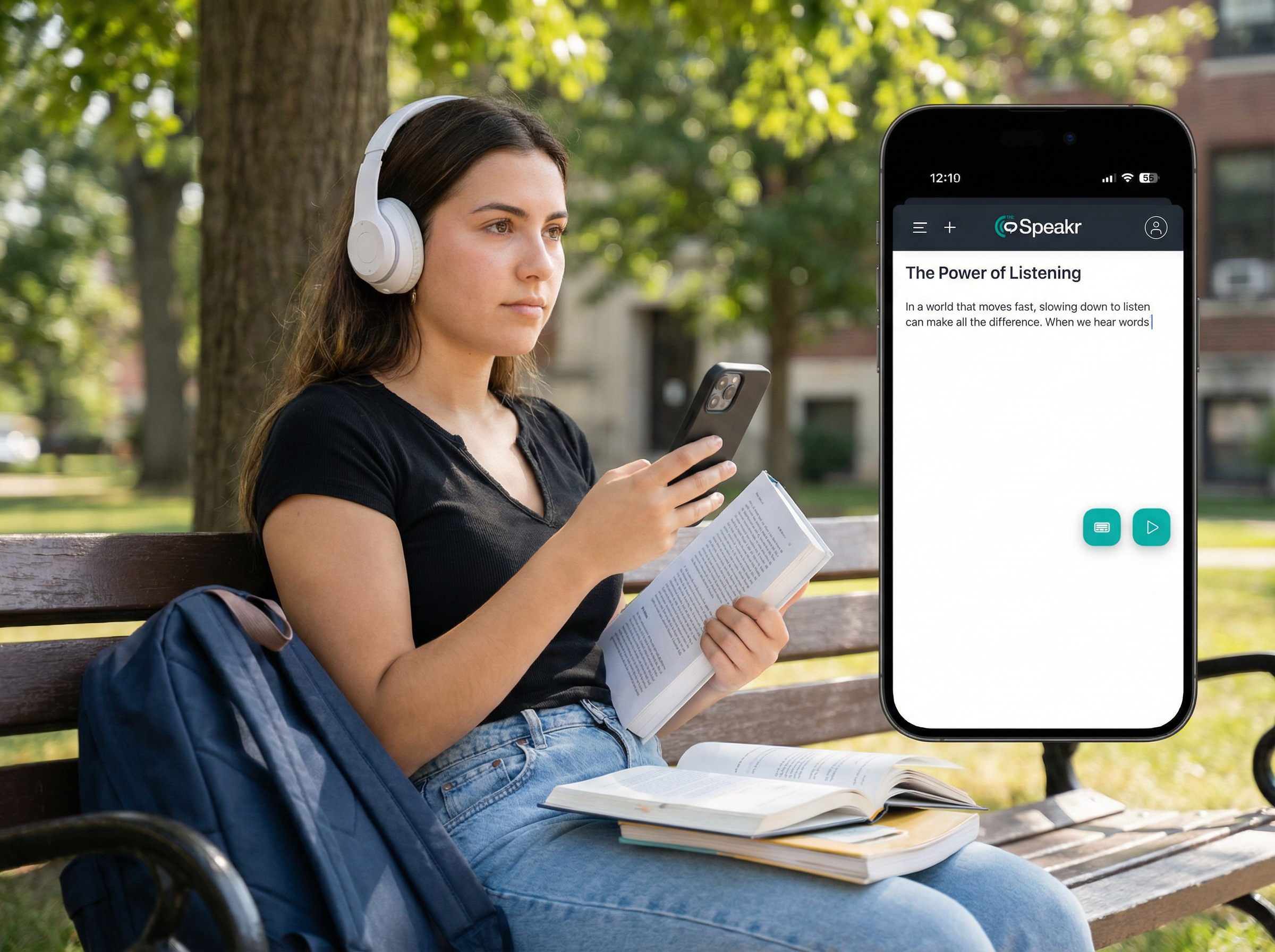
A 2024 study published in the Journal of Educational Technology Systems found that students using TTS improved reading comprehension by 15% and note-taking speed by 28%. Teachers who convert articles, PDFs, and lecture notes into audio playlists report saving 30–60 minutes of daily screen time. Modern tools like TheSpeakr and NaturalReader run directly in the browser or on mobile, so the material is available wherever students are.
TTS is no longer just an accessibility aid. It is a productivity tool for anyone who reads a lot.
How Students Actually Use Text-to-Speech
Studying on the go
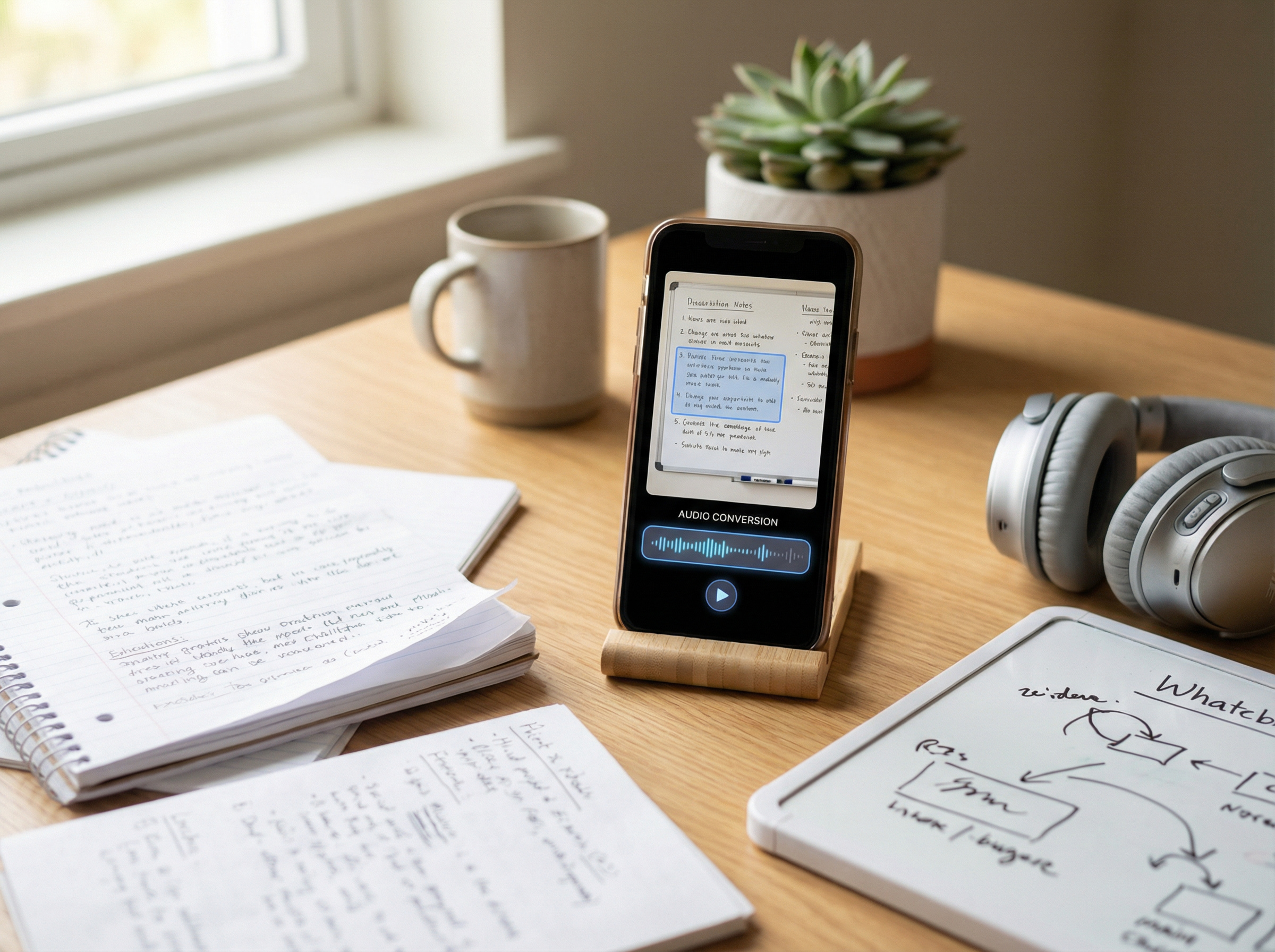
One of the most practical advantages of TTS is that it turns otherwise idle time into study time. Commuting, exercising, or doing chores becomes an opportunity to work through a reading list. For students balancing academic, work, and personal responsibilities, this flexibility is significant. Educational technology research consistently shows that converting PDFs and articles to audio helps students engage with material they might skip.

Language learning and ELL contexts
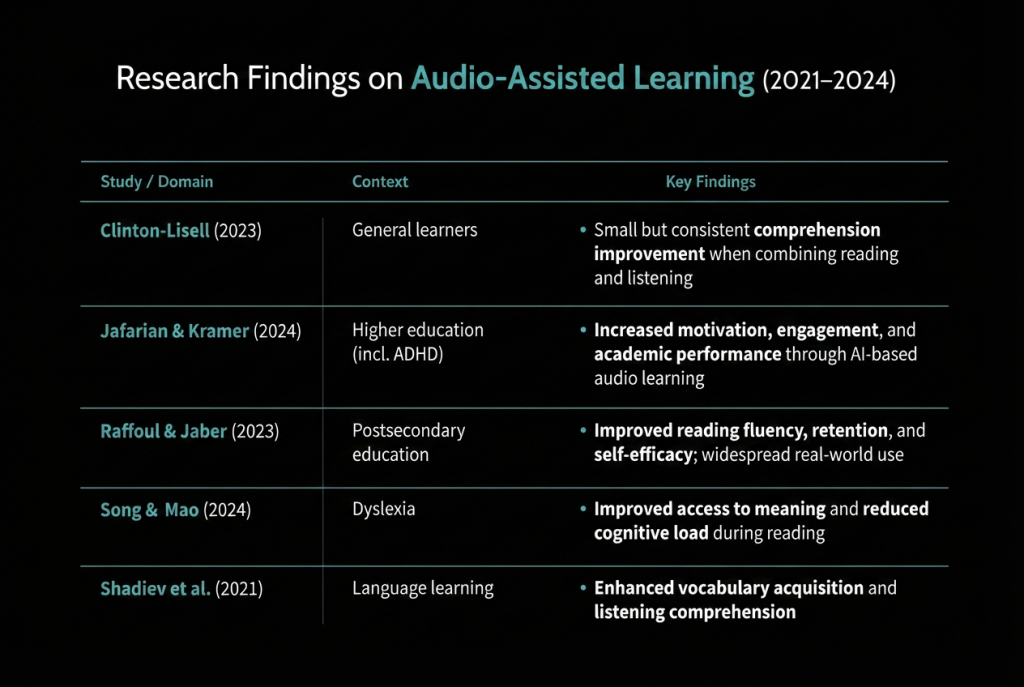
TTS tools give language learners consistent, reliable pronunciation models. Research by Shadiev et al. found that TTS technologies improve vocabulary acquisition and listening comprehension by helping learners connect the written and spoken forms of language — a link that is harder to develop through reading alone.
Universal design for learning
Although originally developed for students with dyslexia or visual impairments, TTS is now embedded in universal design for learning (UDL) frameworks, which treat accessibility features as beneficial for all learners. TTS reduces eye strain, supports multisensory engagement, and makes digital content easier to process across ability levels.
What does the research show about text-to-speech for students?
Comprehension and retention
A meta-analysis by Clinton-Lisell found that combining reading with listening produces a small but consistent improvement in comprehension compared to reading alone. The effect is most pronounced when learners can control playback speed and actively engage with the material — conditions that modern TTS tools make easy to meet.
Song & Mao show that students with dyslexia benefit significantly from TTS, primarily because it reduces the cognitive load of decoding, freeing up mental resources for understanding meaning.
Motivation and engagement
Raffoul & Jaber identify increased self-efficacy and motivation as consistent outcomes of TTS use in higher education. This is backed by experimental evidence: Jafarian & Kramer ran a randomized controlled trial showing that AI-generated audio learning materials significantly improved both student engagement and academic performance compared to text-only formats. Students with stronger ADHD symptoms showed the largest gains, suggesting that TTS is particularly effective for attention-related challenges.
Summary of key studies
TTS for Students with Disabilities
For students with specific learning differences, TTS is more than a convenience — it changes what academic work feels like.
Dyslexia
Students with dyslexia spend significant cognitive energy decoding words, leaving less capacity for comprehension. TTS shifts part of that work to the auditory channel. Research shows that students with dyslexia often achieve better comprehension when using TTS alongside reading, particularly when they control playback actively. It works best as a compensatory support alongside reading instruction, not as a replacement for it.
ADHD
TTS provides a natural pacing mechanism that helps reduce mind-wandering during reading. Adjustable playback speed lets students match the rate of information delivery to their attention state. The Jafarian & Kramer trial found that students with stronger ADHD symptoms showed the greatest improvements in engagement and performance when using audio-based learning materials.
Visual impairments
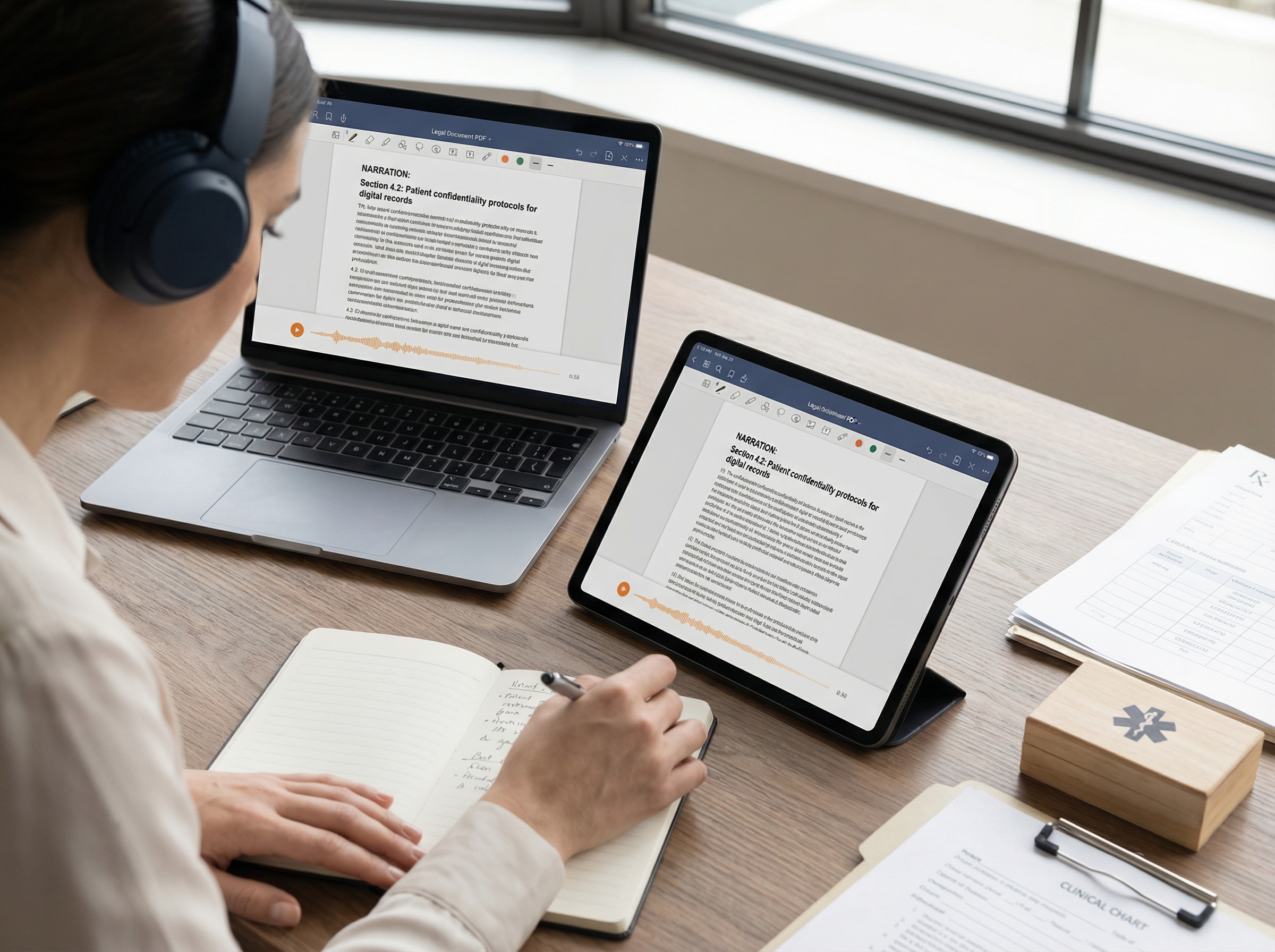
For visually impaired students, TTS is a primary access tool rather than a supplementary one. Modern TTS systems integrate with screen readers and digital learning platforms, providing seamless access to academic materials across environments. Institutional research consistently identifies TTS as a foundational accessibility feature in higher education for this group.
Other learning disabilities
More broadly, TTS reduces the cognitive load of dense academic reading, which benefits students across a range of learning differences. In postsecondary settings — where reading volumes are high and instructional support is limited — the ability to listen rather than read can make the difference between keeping up and falling behind.
The Bottom Line
Text-to-speech has a stronger evidence base than its reputation suggests. It improves comprehension, raises engagement, supports students with disabilities, and helps anyone who needs to get through a large volume of reading efficiently. The research is consistent: TTS works, and it works for a wider range of students than it was originally designed for.