Text-to-Speech in YouTube Videos: Use Cases and Research
The utilization of text-to-speech technology within the context of YouTube video creation has rapidly transitioned from being just an experimental technique to becoming a fundamental part of the process. Where one would need to hire a professional voice artist before, the task can now be accomplished within a few minutes. In today’s world, creators leverage the power of AI-generated voiceovers to create anonymous videos, translate their videos into different languages, and optimize their processes. But is it effective? Is it actually worth it?
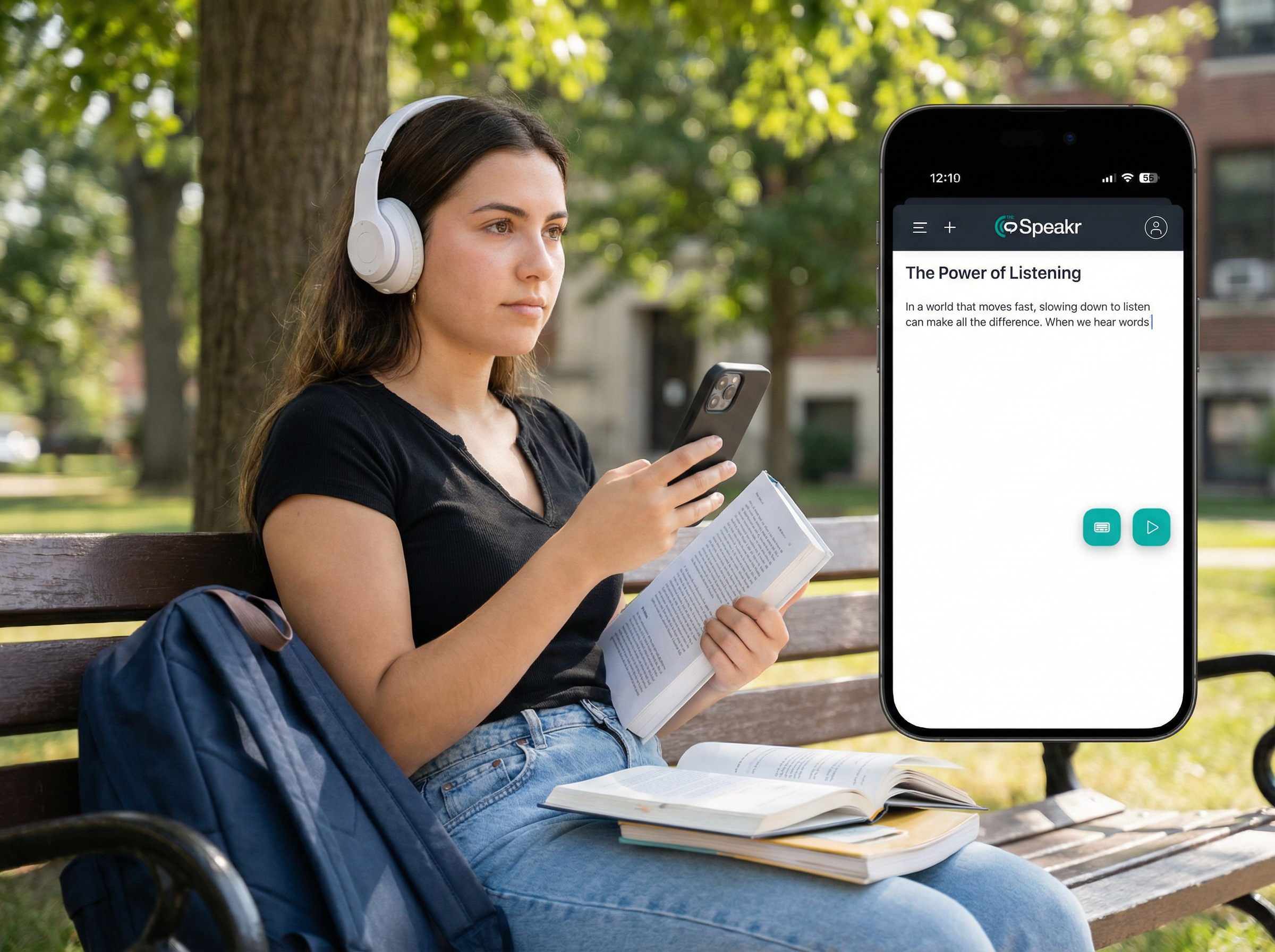
This article is based on analysis of real YouTube creator workflows and recent research on AI voice technology, including practical evaluation of text-to-speech tools used in video production. Both angles matter, because the practical case for TTS is strongest when backed by evidence. If you are looking for specific tool recommendations, TheSpeakr has a dedicated breakdown of text-to-speech options for YouTube creators.
How Creators Are Using TTS on YouTube
Faceless channels and consistent narration
A large share of TTS adoption comes from faceless channels — top-10 lists, trivia, Reddit story narrations, and similar formats where the creator never appears on screen. For these channels, an AI voice handles all narration, keeping tone and quality consistent across every video without the cost of hiring a voice actor.
The appeal is practical: consistent delivery reinforces channel identity, and production time drops significantly when there is no recording session to schedule. Creators using Amazon Polly or Google’s neural voices have run high-volume content operations this way for years. Newer tools like ElevenLabs have expanded the options considerably, offering more expressive voices and the ability to clone a creator’s own voice for use in other languages.
Educational and explainer content
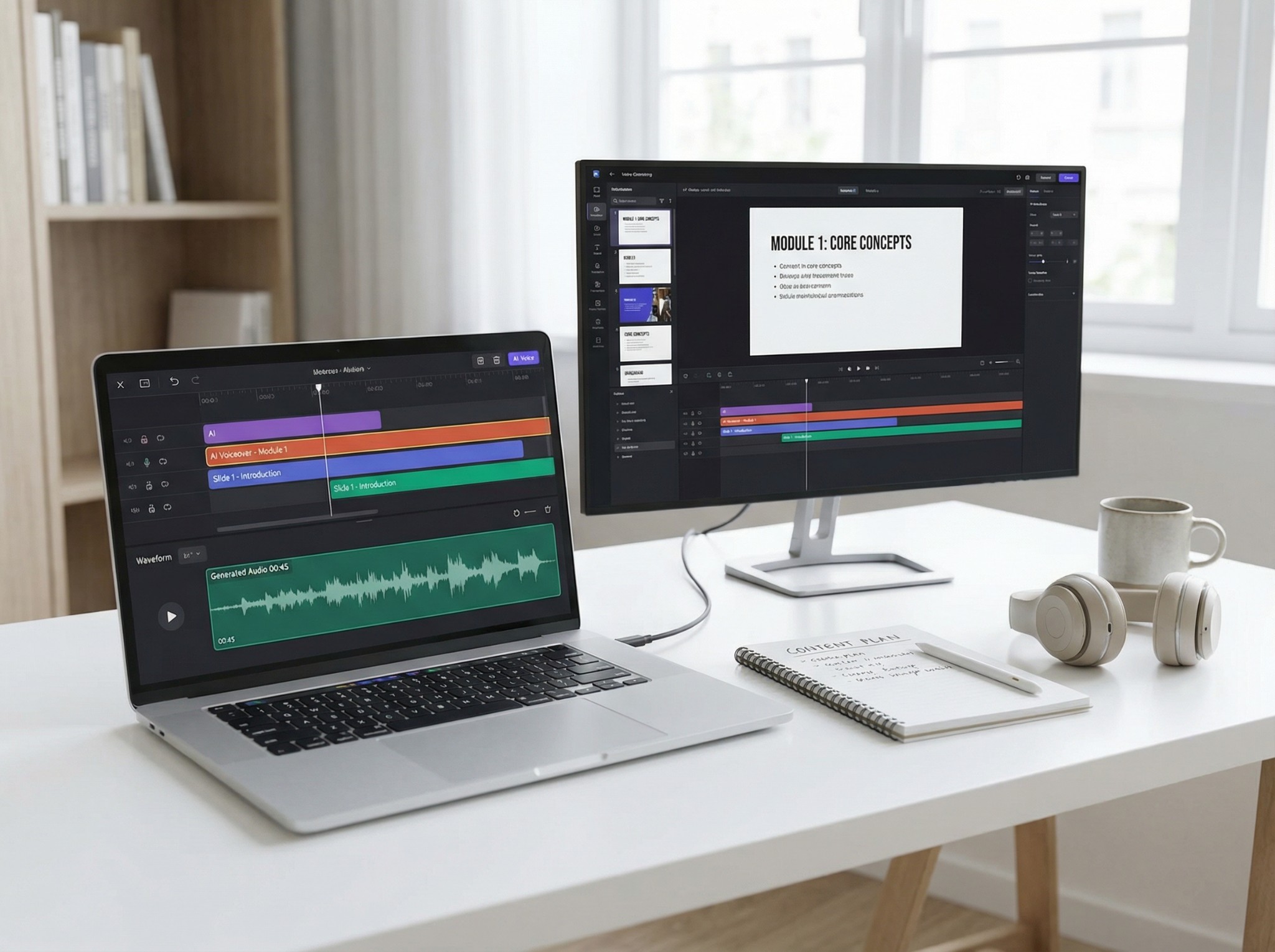
TTS is particularly well-suited to educational videos — tutorials, lectures, animated explainers — where clear, controlled narration matters more than personality. One underappreciated advantage is how easy it makes updates: if a fact changes or a segment needs revision, editing the script and regenerating the audio takes minutes rather than a full re-record.
For creators who lack vocal training or simply find recording uncomfortable, TTS also removes a genuine barrier to production. Modern tools offer enough voice variety — authoritative, neutral, conversational — that creators can match tone to content type without difficulty.
Multilingual dubbing and localization
This is arguably where TTS has had its biggest impact. Creators can now translate a script and generate a voiceover in Spanish, Hindi, French, or dozens of other languages without needing native speakers. A single channel can effectively publish for a global audience.
YouTube’s own pilot program for multi-language audio tracks found that channels adding AI-dubbed tracks saw over 25% of watch time coming from non-primary language audiences. Jamie Oliver’s channel reportedly tripled its views after adding Spanish and Portuguese AI voiceovers. ElevenLabs supports 70+ languages with region-specific accents, meaning an AI dub can sound like a local speaker rather than a translated script read flatly.
The localization use case is one where TTS has a clear advantage over human alternatives: the speed and cost of generating a new language track is a fraction of what professional dubbing would require.
YouTube Shorts and short-form content
Short-form video has driven heavy TTS adoption simply because the format rewards speed. A 30-second clip with on-screen text and an AI voiceover can be produced and published faster than any human-narrated alternative. YouTube added a built-in TTS feature to Shorts in 2023, reflecting how common the approach had become.
Use cases range from educational micro-explainers to product reviews to comedy content that uses deliberately robotic voices for effect. Some synthetic voices — particularly a female narrator voice popularized on TikTok — have become recognizable stylistic elements that creators use intentionally. For high-volume Shorts operations, TTS is essentially indispensable.
Accessibility narration
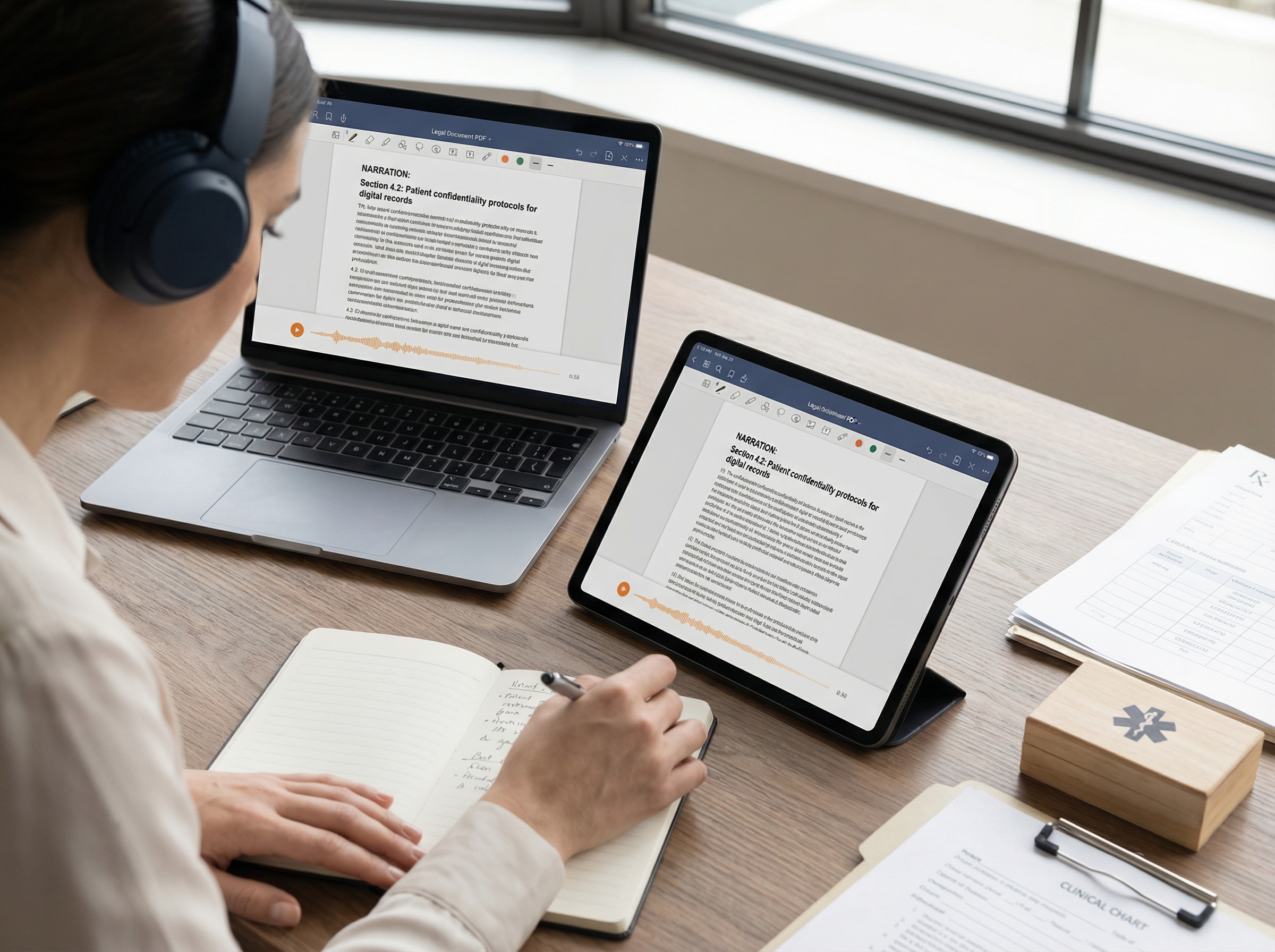
Adding a voiceover to text-heavy content — slides, on-screen captions, quoted text — makes videos accessible to visually impaired viewers who would otherwise miss the information. Some creators have gone further, using TTS to generate audio description tracks that narrate what is happening on screen during visual-only moments.
The cost argument is significant here. Producing a human-narrated audio description is time-consuming and expensive, which is why so little video content currently has one. TTS can generate a description track in minutes. Researcher Agnieszka Szarkowska has argued that TTS can meaningfully increase the total volume of described content available, addressing what is currently a serious shortage.
AI Voiceovers for YouTube: What the Research Actually Shows
Comprehension and cognitive load
The most practically important question is whether viewers understand AI-narrated content as well as human-narrated content. For informational material, the answer is largely yes.
A study by Bione & Cardoso tested English-language comprehension in Brazilian students who listened to passages narrated by either a human or a modern TTS voice. There were no significant differences in comprehension or dictation task performance. Participants rated the AI voice slightly lower on naturalness, but equally clear in terms of understandability.
Govender & King found that modern neural TTS systems like Tacotron 2 and FastSpeech 2 are nearly as easy to follow as human audio — even in noisy conditions. For educational creators, the takeaway is clear: a high-quality AI voice does not make viewers work harder to understand content.
There is also a secondary benefit. Cognitive load theory suggests that listening to narration while watching visuals is more efficient than reading on-screen text while watching visuals, because the two channels (audio and visual) are processed separately. Adding a TTS voiceover to a text-heavy video can therefore improve learning efficiency, not just convenience.
Engagement and emotional response
Engagement is where the picture becomes more nuanced. A 2025 study published in Computers in Human Behavior found that participants frequently could not identify whether a voice was synthetic or human, particularly when the voice spoke in a positive emotional tone. Ratings of voice attractiveness and approachability were driven more by the expressed emotion than by whether the voice was real. A cheerful AI voice was rated nearly as favorably as a cheerful human voice.
However, human voices still outperform TTS when emotional depth is central to the content. Rodero et al. ran an experiment on audiobook narration and found that human-read stories produced higher enjoyment, stronger immersion, and better recall than AI-narrated versions. Listeners described feeling more connected to the material. The researchers attributed this to what they called the “human emotional intimacy effect” — subtle inflections and authenticity that current TTS does not fully replicate.
A 2024 RNIB study on audio description reached a similar conclusion. Blind viewers generally could not tell descriptions were synthetic until informed, and found TTS acceptable for factual content. But they noticed and missed emotional expressiveness in genres like sports or drama — moments where a live narrator might laugh, pause for effect, or convey tension. For those contexts, flat AI delivery was felt as a loss.
The practical takeaway: for informational, expository, or neutral-tone content, TTS engages audiences comparably to human narration. For content where emotional connection is the point — personal vlogs, storytelling, drama — a human voice still has a measurable advantage.
Language learning
TTS has a well-supported role in language education. The Bione & Cardoso study found that learners could comprehend and transcribe AI-narrated speech just as accurately as human speech, leading the authors to conclude that TTS has genuine potential as a pedagogical tool — particularly in contexts where natural exposure to the target language is limited.
Zhang et al. found that comprehension and engagement held up well with fully AI-generated videos, with consistent AI visuals and audio even reducing cognitive load slightly in some cases. Learners who knew they were watching an AI instructor were not disadvantaged by it.
TTS voices can demonstrate correct pronunciation at adjustable speeds — making them useful for language learners who need extra phonetic clarity. Research shows no significant difference in learning outcomes between TTS and human-voice instruction, as long as the voice is intelligible.
Text-to-Speech for YouTube Videos: When It Works and When It Doesn’t
The research and creator use cases outlined above point to a fairly clear pattern for when TTS is the right tool for the job and when it falls short.
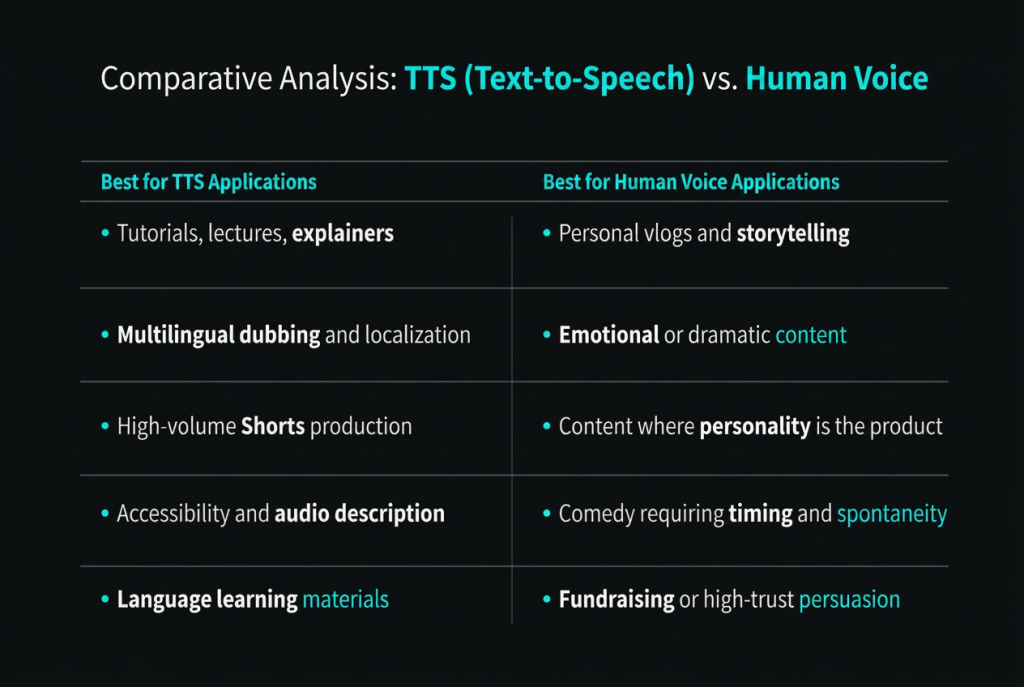
These are tendencies rather than hard rules but they reflect where the evidence consistently points.
The Bottom Line
Modern TTS holds up well under scientific scrutiny for the use cases where it is most widely deployed. It doesn’t reduce comprehension and can actually lower cognitive load in learning contexts. For small creators, it has transformed what’s possible across languages and formats.
The honest caveat is emotional expressiveness. When a video depends on human connection, a real voice still makes a difference that research can measure. The gap is closing as AI voices improve, but it has not closed yet.
For most informational YouTube content, TTS is not a compromise. It is a legitimate production choice with a solid evidence base behind it.