Luvvoice Review 2026: Voice Quality, Pricing, PDF Workflows & Real Limitations
Luvvoice is one of the more interesting AI text-to-speech platforms currently competing in the growing TTS market. Unlike traditional reading apps that focus mainly on accessibility, Luvvoice combines multilingual AI voices, downloadable audio, voice cloning, document-to-speech workflows, and developer APIs inside a lightweight browser-based platform. Its biggest strength is accessibility to modern AI voice tools, allowing users to generate speech from text, upload documents, download MP3 files, and experiment with voice cloning without needing advanced production software. The free plan is also surprisingly usable compared with many competitors, offering monthly character allowances, downloadable audio, and access to a large multilingual voice library.
That said, Luvvoice is not perfect. Public information around pricing and quotas is occasionally inconsistent, OCR support for scanned PDFs remains limited, and the platform feels more optimized for lightweight narration workflows than for high-end studio production. Compared with ElevenLabs, emotional realism and advanced production tooling are still less developed. Even so, for creators, students, educators, and users looking for fast browser-based AI narration, Luvvoice remains one of the stronger lightweight TTS platforms available in 2026.
Best for multilingual narration, lightweight content creation, fast browser-based TTS, document listening, and casual voice cloning. Skip it if you need advanced audiobook production, highly emotional voice generation, or OCR-heavy document workflows.
What Is Luvvoice?
Luvvoice is an AI-powered text-to-speech platform that converts written text into natural-sounding speech using neural voice synthesis. The platform supports multilingual narration, downloadable audio generation, document-to-speech workflows, voice cloning, and API integrations. In practice, users can generate speech from text, upload PDF, TXT, EPUB, and DOCX files, download MP3 audio, clone voices from audio samples, adjust speech settings, and integrate TTS generation through APIs.
Compared with accessibility-focused reading tools like Speechify or NaturalReader, Luvvoice leans more toward creator workflows, making it better suited for YouTube narration, short-form content, e-learning, podcasts, and lightweight audiobook generation rather than passive cross-device listening.
At the same time, it remains much simpler than enterprise-focused AI audio suites, and that simplicity is one of its biggest advantages. According to the official Luvvoice website, the platform currently markets 200+ AI voices, 70+ supported languages, downloadable MP3 generation, voice cloning, API access, browser-based generation, and document-to-audio workflows. Some public pages reference even larger voice libraries with more than 300 voices, but regardless of the exact number, Luvvoice offers unusually broad language and accent coverage for a lightweight browser-based TTS platform.
How We Tested Luvvoice
This review is based on official Luvvoice documentation, public product pages, hands-on workflow testing, and direct comparison against competing TTS platforms, including ElevenLabs, Murf AI, Speechify, NaturalReader, and The Speakr.
Testing included:
- browser-based text generation
- PDF uploads
- TXT and DOCX imports
- multilingual voice testing
- voice cloning workflows
- MP3 exports
- speech-rate adjustments
- API documentation analysis
We also tested English, Spanish, and Lithuanian voices to evaluate pronunciation consistency across languages.
Part of this review focused specifically on usability rather than pure voice realism. Luvvoice positions itself as a lightweight and accessible AI voice platform, so workflow speed and simplicity matter almost as much as raw audio quality.
For transparency, this review references competitors operating in the same TTS category, including The Speakr.
Is Luvvoice Free?
Yes, Luvvoice offers a permanent free plan, although the exact monthly quota varies depending on which public page you reference, with some pages mentioning 10,000 characters per month and others referencing 20,000-character limits. Even so, the free tier is significantly more usable than the restricted demo plans offered by many competing AI voice platforms. The free version currently includes AI voice generation, MP3 downloads, multilingual voices, speech controls, document uploads, limited voice cloning, and full browser-based access. One of its biggest advantages is that Luvvoice does not aggressively restrict exports on the free tier, allowing users to generate and download usable audio without immediately upgrading to a paid subscription.
Most users do not think in characters, however — they think in minutes of narration. A practical estimate is roughly 150 spoken words per minute and around 5–6 characters per word including spaces, meaning:
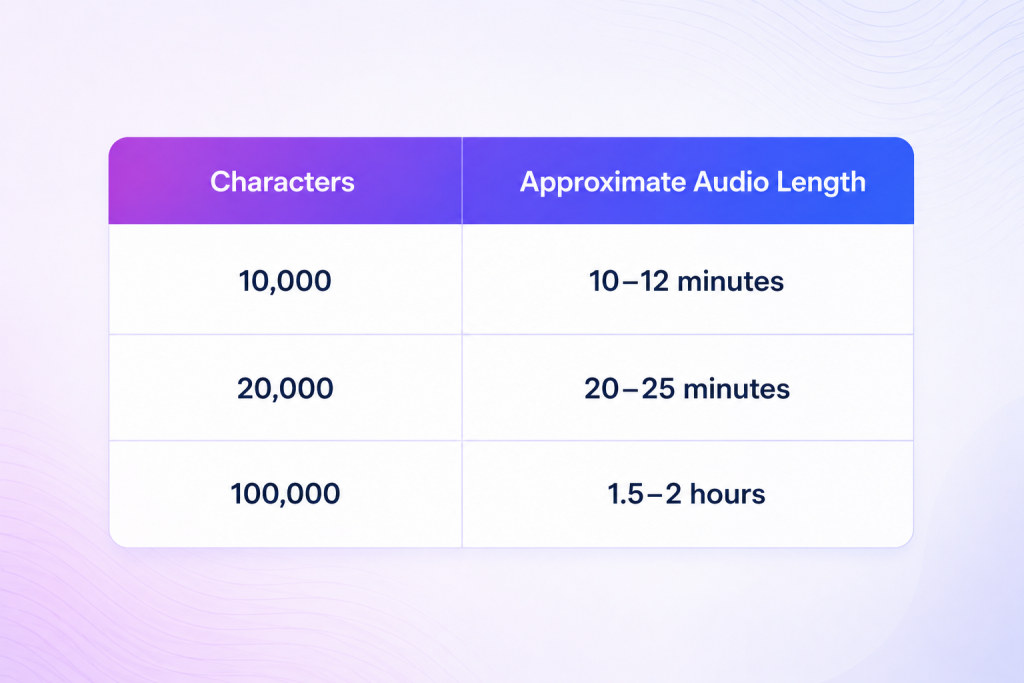
This makes the free plan surprisingly practical for YouTube shorts, educational explainers, podcast intros, language-learning audio, and short audiobook samples, although the limitations become more noticeable once users move into long-form narration or high-volume production workflows.
Voice Quality: How Good Does Luvvoice Actually Sound?
Voice quality is where Luvvoice stands out from many lightweight browser-based TTS tools. Compared with older robotic text readers, the voices sound smoother, cleaner, and more conversational, especially in short-form narration where pacing and pronunciation clarity matter more than dramatic emotional delivery. The platform’s biggest strengths are its multilingual coverage, accent variety, generation speed, and generally solid pronunciation across different languages.
Its biggest weakness is emotional realism. Compared with premium systems like ElevenLabs V3 or advanced cloned voices, Luvvoice still sounds flatter during cinematic storytelling, emotional transitions, tonal variation, and long-form narration. That does not make the platform weak — it simply positions Luvvoice differently within the TTS market. While ElevenLabs focuses heavily on expressive premium voice synthesis, Luvvoice prioritizes fast, scalable, and easy-to-use narration workflows.
One area where Luvvoice performs especially well is language breadth. The platform supports dozens of accents and regional variants across languages including English, Spanish, French, German, Portuguese, Japanese, Korean, Lithuanian, Hindi, and Arabic. Many TTS platforms technically support multiple languages but begin sounding unnatural outside English, while Luvvoice performs better than average for lightweight multilingual generation, particularly considering how simple and accessible the workflow remains.
Voice Cloning on Luvvoice
Voice cloning is one of the platform’s most commercially interesting features.
Luvvoice allows users to upload or record a voice sample and generate synthetic speech using a cloned version of that voice.
The workflow is straightforward:
- upload or record a sample
- create the voice profile
- enter text
- generate cloned speech
Compared with enterprise-grade cloning systems, the process is intentionally simplified.
How Realistic Is the Cloning?
The realism of Luvvoice voice cloning depends heavily on the quality of the source sample. Short recordings can still produce recognizable voice characteristics, but results improve significantly when the audio is clean, consistent, noise-free, and longer in duration. For lightweight narration, social content, and experimentation, the cloning quality is surprisingly good, especially considering how simple the workflow is.
However, premium platforms like ElevenLabs still maintain a noticeable advantage in highly emotional narration, particularly during dramatic pacing, tonal variation, emotional transitions, and long-form speech generation. Even so, Luvvoice cloning performs far better than most users would expect from a lightweight browser-based TTS platform.
PDF-to-Speech Workflows and OCR Limitations
Luvvoice supports document-to-audio generation through uploads including PDF, TXT, EPUB, and DOCX files, making the platform useful for listening to articles, converting study material into audio, experimenting with audiobooks, and passive learning workflows. For clean digital documents, the process is straightforward: upload the file, extract the text, choose a voice, and generate downloadable narration directly from the browser.
The platform’s biggest limitation in this area is OCR handling. Luvvoice struggles with scanned or image-based PDFs because OCR is not deeply integrated into the workflow. In practice, text-based PDFs usually work well, while scanned documents and photographed pages may fail to extract properly unless the text is processed through an external OCR tool first.
This makes Luvvoice less suitable for OCR-heavy accessibility workflows compared with platforms like Speechify or NaturalReader, both of which are generally stronger for reading scanned documents and educational material. Luvvoice works better as a lightweight creator-oriented narration platform focused on multilingual AI voice generation rather than advanced document accessibility.
Luvvoice Pricing
Pricing is one of the more confusing parts of the platform because public information occasionally differs between pages.
The general structure includes:
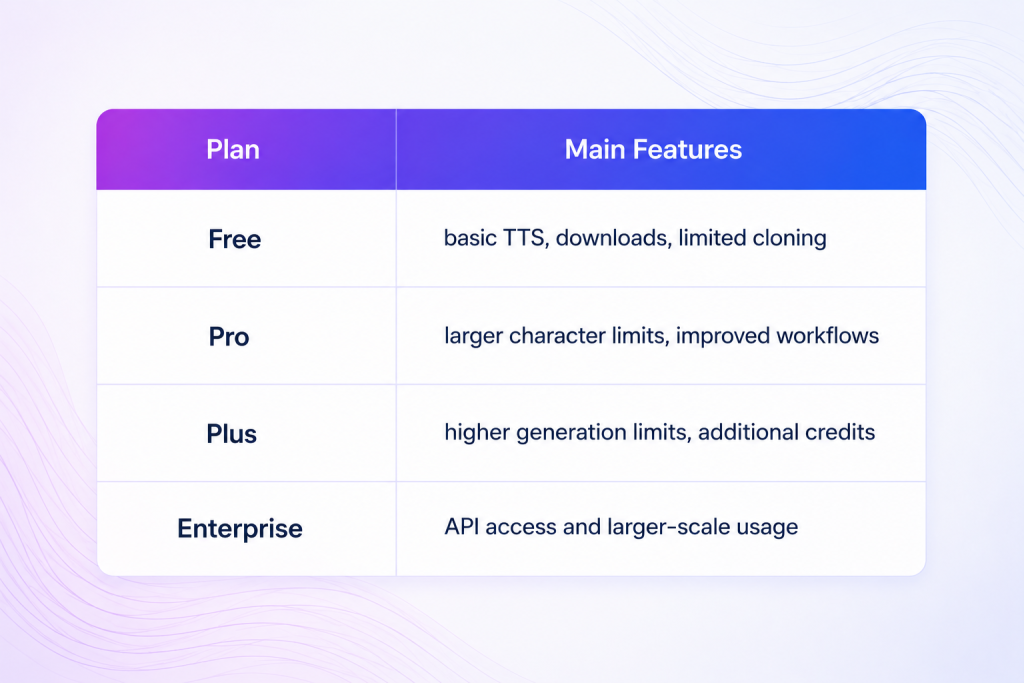
The platform also references one-time credit packs for users who prefer usage-based generation instead of subscriptions.
Practical Pricing Value
Luvvoice makes the most sense economically for:
- casual creators
- educators
- indie YouTubers
- students
- multilingual narration workflows
The value becomes weaker for:
- studio-level audiobook production
- large commercial narration teams
- advanced emotional AI performance
Compared with ElevenLabs, Luvvoice is usually cheaper and simpler.
Compared with basic accessibility readers, however, it offers more creator-focused functionality.
API Access and Developer Tools
Luvvoice also positions itself as a developer-friendly AI voice platform, with public documentation referencing API endpoints, bearer-token authentication, request limits, cloned-voice support, and voice-generation APIs. This gives developers a lightweight way to integrate AI speech generation into apps, websites, AI agents, educational tools, and automated narration systems. Compared with creator-focused platforms like Murf AI or ElevenLabs, Luvvoice feels simpler and easier to approach for smaller projects, although its ecosystem and advanced production infrastructure are still less developed than premium AI voice platforms.
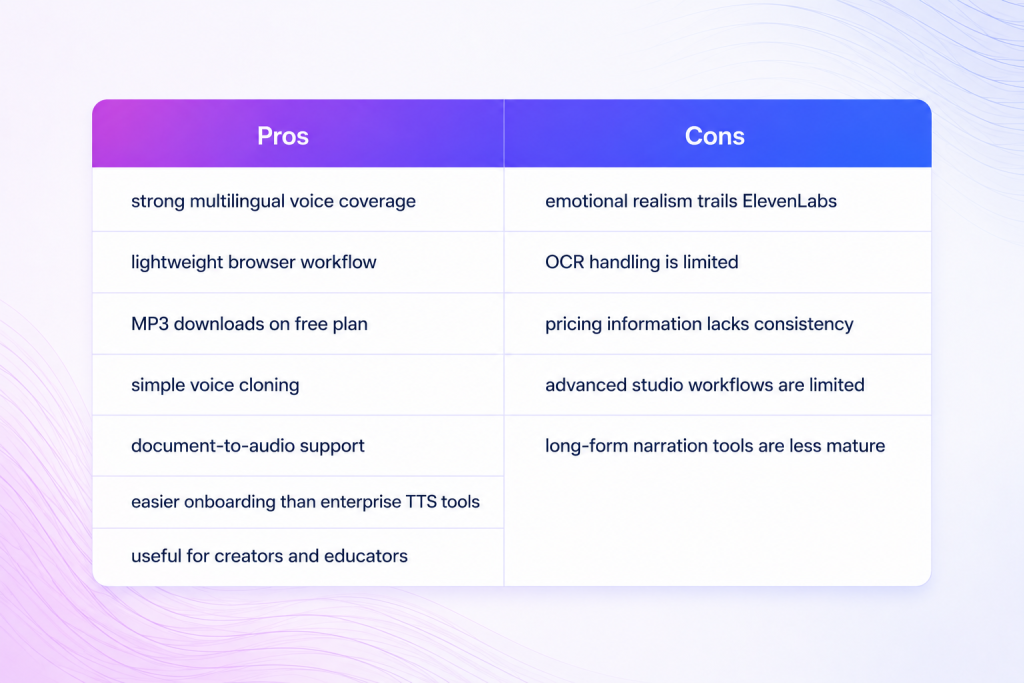
Luvvoices Pros and Cons
Here’s a quick overview of where Luvvoice performs well and where its limitations become more noticeable compared with other modern TTS platforms.
Best Alternatives
The best Luvvoice alternative depends largely on your workflow. Compared with ElevenLabs, Luvvoice is simpler and easier to use for casual narration, while ElevenLabs delivers stronger voice quality, cloning, and production tools. Speechify is better suited for accessibility and reading workflows, whereas Murf AI focuses more on business voiceovers and team collaboration.
For a broader comparison of leading platforms, see our guide to the best text-to-speech tools in 2026, which compares ElevenLabs, Murf AI, Speechify, NaturalReader, and other popular AI voice solutions.
Accessibility and the Growth of AI Voice Technology
The AI voice market continues growing rapidly because text-to-speech is no longer limited to accessibility-only use cases.
Modern TTS platforms now support:
- video creation
- podcasts
- language learning
- passive reading
- e-learning
- AI assistants
- customer support
- audiobook production
According to the World Health Organization, at least 2.2 billion people globally live with near or distance vision impairment, while organizations like W3C continue emphasizing the importance of text-to-speech technologies for users with dyslexia, partial sight, cognitive load challenges, and multitasking workflows. That growing demand for accessible and flexible audio consumption is one of the main reasons lightweight browser-based AI voice platforms like Luvvoice continue expanding beyond traditional accessibility-focused use cases.
Is Luvvoice Worth It?
Luvvoice is worth considering for users who want fast and accessible AI voice generation without the complexity of enterprise-level audio platforms. Its biggest strengths are multilingual narration, downloadable MP3 audio, lightweight voice cloning, and simple browser-based workflows that make it especially useful for creators, educators, students, and casual content production. While it still falls behind premium competitors like ElevenLabs in emotional realism, advanced production tooling, and OCR-heavy accessibility workflows, Luvvoice remains one of the stronger lightweight TTS platforms currently available.
FAQ
- Is Luvvoice free?
Yes. Luvvoice offers a permanent free plan with monthly character limits, MP3 downloads, multilingual voices, and limited voice cloning.
- How much does Luvvoice cost?
Luvvoice includes free, Pro, Plus, and Enterprise plans, along with one-time credit packs. Pricing and quotas vary, so users should confirm current details on the official website.
- Is Luvvoice good for voice cloning?
Yes. Luvvoice delivers surprisingly strong cloning quality for a browser-based TTS platform, especially when using clean and longer voice samples.
- Does Luvvoice support PDFs?
Yes. Users can upload PDF, TXT, EPUB, and DOCX files for document-to-speech generation.
- Can Luvvoice read scanned PDFs?
Not directly. Luvvoice does not currently support OCR, so scanned or image-based PDFs usually require external OCR processing first.
- Does Luvvoice have an API?
Yes, although API access is mainly positioned toward higher-tier or enterprise users.
- How many voices and languages does Luvvoice support?
Luvvoice publicly references 200+ voices across more than 70 languages and accents.
- Can I use Luvvoice commercially?
Commercial usage depends on the subscription tier. Users should review the licensing terms on luvvoice.com before using generated audio in monetized content.
- What are the best Luvvoice alternatives?
Popular alternatives include ElevenLabs, Murf AI, Speechify, NaturalReader, and The Speakr, depending on whether the priority is voice realism, accessibility, production workflows, or lightweight listening.